

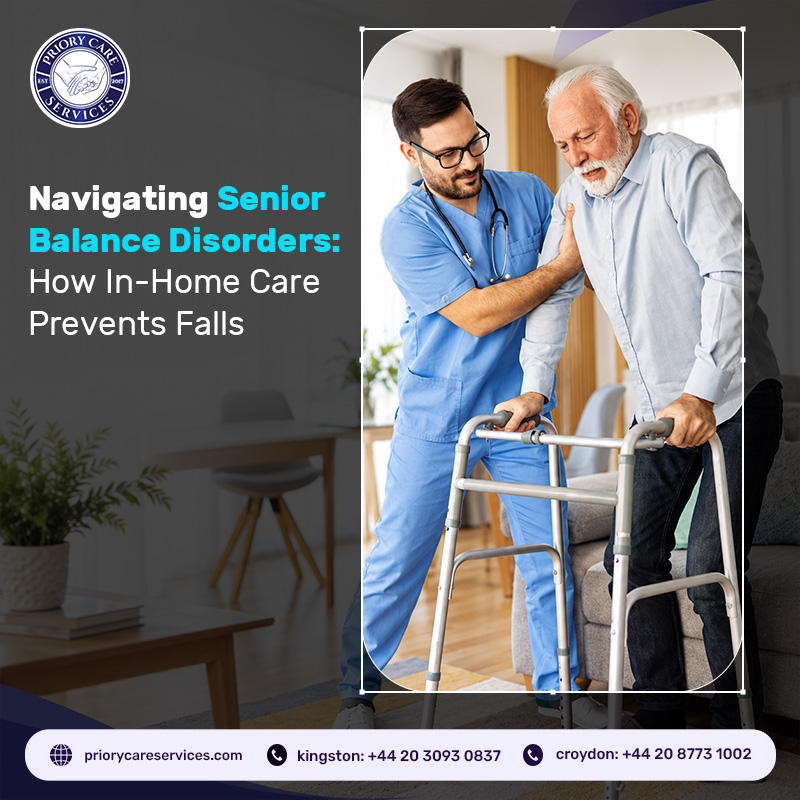
Has your mum started holding onto the furniture when she crosses the lounge? Or does your dad wait a second after standing up, as if he’s letting the room settle? Those habits are easy to brush off, but they’re often the first sign that balance is slipping.
If you’re worried about someone in Orpington, Beckenham or anywhere nearby, home care services in Bromley can help you get ahead of a fall rather than cope with one afterwards.
Understanding Balance Disorders and Fall Risks in Later Life
Staying upright takes more than people realise. Your inner ear tells your brain which way is up, and your eyes and the sensors in your legs add the rest. When one of them gets unreliable, the others cover for a while. Then they can’t.
A few things usually sit behind it:
- An inner ear problem like positional vertigo, which can make the room spin just from rolling over in bed
- Weaker legs, which happen faster than most people expect, especially after a stay in hospital
Medication is the one families forget. Some blood pressure and sleeping tablets cause dizziness, mostly when the dose is new or taken at the wrong time of day.
About one in three people over 65 falls at least once a year. A broken hip can mean surgery, weeks on a ward and a recovery that never quite gets back to where things were. But the injury isn’t always the worst of it. Plenty of people stop using the stairs, then stop going out, because they’re frightened it’ll happen again.
And you get the phone call. You wonder whether you should have been there.
So waiting isn’t much of a plan. If someone is wobbly now, that’s the moment to act.
How Personalised In-Home Care Bridges the Safety Gap
A carer who visits regularly spots things you might miss on a Sunday afternoon. Maybe Dad’s gripping the worktop harder than before. Maybe Mum hasn’t gone into the upstairs bathroom all week.
The help itself is hands-on. Think about the riskiest moments in an ordinary day: climbing into the bath, balancing on one leg to pull on trousers, reaching for a pan while the kettle boils. A carer stays within arm’s reach for those moments, close enough to steady someone without doing everything for them. People hold on to their independence much better when they aren’t treated like patients.
There’s a quieter benefit too. Someone chatting over a cuppa isn’t hurrying to answer the door or the phone, and hurrying is when a lot of falls happen.
Explore the hidden efficiencies of home care for families under pressure.
Practical Ways Domiciliary Care Lowers Fall Hazards at Home
What does this look like day to day? Mostly small, practical jobs.
Around the house, a carer clears walkways, moves clutter, and mentions the landing bulb that’s gone or the rug that curls at the edge. They take five minutes, but they’re exactly what trips people up.
Medication needs its own attention:
- Timing matters. A drowsy tablet taken just before someone gets up in the night is asking for trouble.
- If dizziness starts after a prescription change, the carer can tell the family and the GP quickly.
Then there’s walking. Getting out of a bed or chair is where plenty of wobbles begin, so carers guide those moves and walk alongside people who’ve lost their nerve until they trust their legs again.
The same applies if you’re looking at home care services in Kingston upon Thames. A maisonette in Surbiton and a bungalow in Petts Wood have different hazards, so the care plan should look different too.
Promoting Long-Term Independence and Peace of Mind
Most people want to stay put, with their own chair and the street they’ve known for decades. With the right support, that’s often possible for much longer than families expect, because risks get dealt with as they appear instead of after something goes wrong.
For you, it means not treating every unanswered phone call as an emergency. Someone trained is keeping an eye out.
Needs do change, though. A person who only wants help with bathing now might need a hand with transfers by spring. A good care plan gets reviewed when that happens, and doesn’t wait for a hospital discharge to start the conversation.
Explore the importance of communication between families and home care providers.
Start With a Conversation
If someone you love is getting unsteady, you don’t have to wait for a fall to look at options. Priory Care Services is CQC-regulated and provides home care services in Bromley and nearby areas, with care built around each person’s own routines and home.
Want to talk it through? Book a consultation with the team. Tell them what you’ve noticed, ask whatever’s on your mind, and they’ll explain what care could look like for your family.