

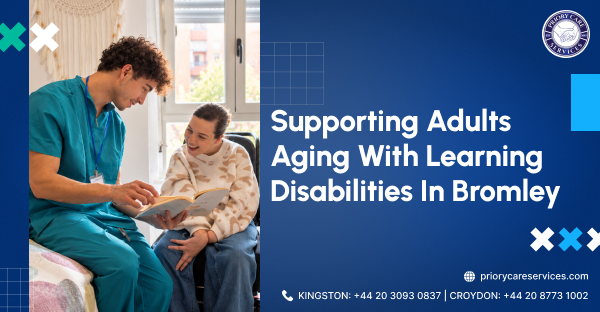
Most families don’t plan for this part. For decades, a parent has been the one who knows the routines, the preferences, the little signs that something is off. Then that parent gets older, tires more easily, or has a fall, and the question nobody wanted to ask comes up: who looks after our son or daughter when we can’t do it the way we used to? Good learning disability home care in Bromley can answer that, and it’s worth looking into well before things reach a crisis.
Learn why the caregivers of elders with sleep issues need respite home care.
Understanding the Changing Needs of Adults with Learning Disabilities
Ageing doesn’t wait for anyone. An adult with a learning disability may find stairs harder, tire sooner, or need more time to get dressed than they did at 40. Some also develop health conditions earlier than most, and those can be hard to spot when someone can’t easily say how they feel.
The emotional side shifts too. Change that once felt manageable can become unsettling. A new face, a rearranged kitchen, a different bus route to the day centre can throw a whole week off.
That’s why staying in a familiar home matters so much. The same mug, the same chair by the window, the same walk to the shops on the high street. Moving someone out of that to solve a care problem often creates a bigger one.
The Core Challenges of Aging Independently at Home
Picture an ordinary Tuesday. Washing, getting dressed, remembering which tablets go with breakfast and which wait until evening, deciding what’s for tea. For an older adult with a learning disability, each step can take more effort than it did five years ago, and the gaps tend to show up quietly.
These are the ones that come up most:
- Personal care: Washing and dressing might need a hand now, and plenty of people find that awkward to ask for, especially if Mum always did it.
- Medication: Different tablets at different times, repeat prescriptions to collect, GP and hospital appointments to get to. Miss one thing and the rest wobbles.
- The house itself: Meals that get cooked, washing that gets done, and someone noticing the fridge is nearly empty.
Loneliness is the one that catches families off guard. If a parent was the main companion and can’t get out as much now, the days get long. Maybe your brother used to head to The Glades or Norman Park most afternoons and now hardly leaves the house. It just crept up, and his mood slipped along with it.
How Personalized Domiciliary Care Bridges the Gap
Domiciliary care means support at home, and at Priory Care Services it starts with a conversation rather than a form. What can the person already do for themselves? And where would help make the day easier? The care plan is built from those answers, and it gets changed whenever the answers do.
Some people only need a carer popping in a couple of times a day. Others need someone close by overnight or all day, and that’s where live-in care in Bromley fits: one regular person in the house, so nothing about home has to change except that there’s more backup. If anxiety or low mood is part of the picture, mental health home care in Bromley can run alongside the everyday support, with carers who know when to slow down and stay calm.
Discover the 5 ways mental health homecare boosts emotional well-being.
Practical Support Services Designed for Daily Living
Every plan looks different, but support usually covers a few main areas.
- Personal care and daily routines: Help with getting up, washing, grooming, and getting ready for bed, done respectfully and at the person’s own pace, with mobility support where it’s needed.
- Companionship and community access: Going out matters. A trip to the shops, a coffee, a hobby group, a visit to a friend. The aim is to keep people connected to the borough they know.
- Medication and health monitoring: Carers make sure medication is taken correctly and on time, notice changes in health or mood, and pass concerns on to the GP or other local healthcare professionals.
Taking the Next Step Toward Reliable Support in Bromley
Planning early makes the move into supported independence gentler. There’s time to get to know a carer and adjust as you go, rather than rushing arrangements after a hospital stay or a bad week. If you’re thinking about learning disability home care in Bromley for yourself or someone you love, a friendly, no-obligation chat is a good place to begin.